

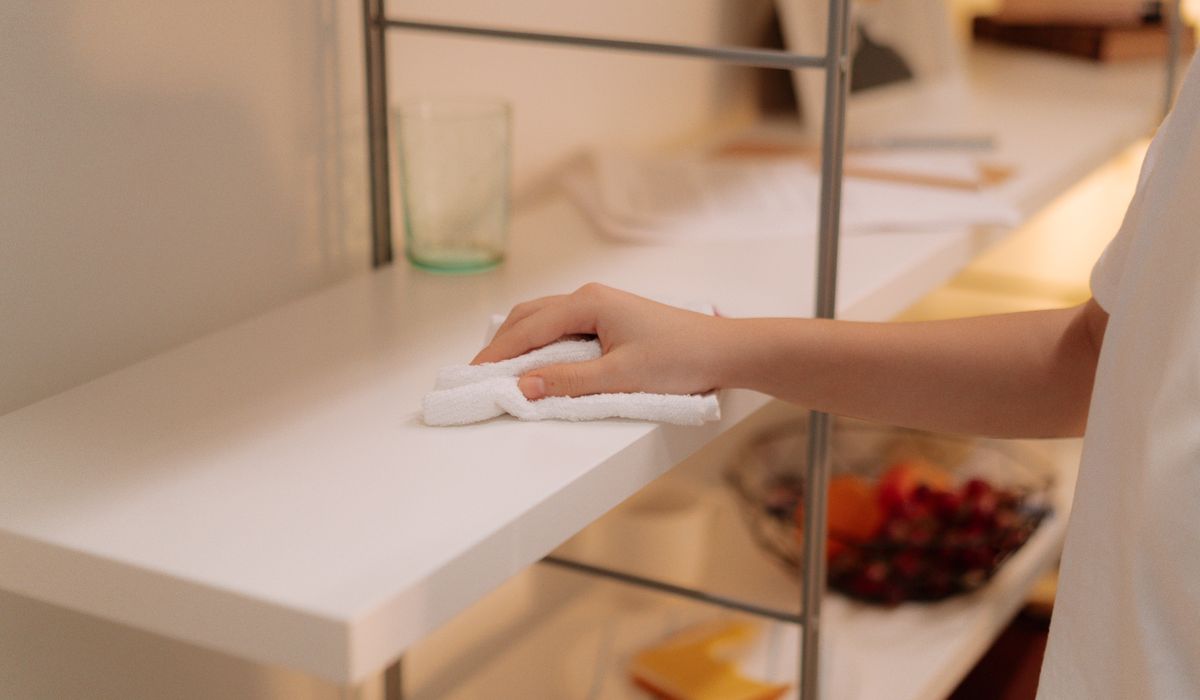
Start with the shelf, not the shop
A tidy cupboard is rarely the result of willpower. It is the result of containers that fit properly and a label that tells everyone where things belong. Before you buy a single basket, empty one shelf at a time and measure it. You need three numbers: the width, the depth and the clear height between that shelf and the one above it. Write them down, or photograph the tape measure resting against the shelf, because cupboard measurements have a habit of disappearing by the time you are stood in a shop.
Leave a 2–3 cm gap at the front of each shelf so a basket can be pulled out without scraping the door frame. If you intend to stack two baskets, take the height of both together, plus a couple of centimetres of breathing room. Measure your tallest item while you are there — the squash bottle, the cereal box, the largest tin — and let that decide the depth. Nothing wastes space faster than a basket that is 4 cm too short for the thing it is meant to hold.
Choose baskets that stack and slide
Straight-sided baskets are the workhorses of a tidy cupboard. Sloped or flared sides look charming but leave dead air between them, which is space you have already paid for in shelf terms. For everyday shelves, open-front baskets or ones with cutaway handles are easiest to grab; lidded boxes suit seasonal or occasional items, but a lid on something you use daily just becomes another obstacle to putting it away.
Mix materials less than you think you should. A shelf of matching baskets — all woven, all clear plastic, or all fabric — reads as calm even when the contents are chaotic, and it makes the cupboard easier to scan. Clear or frosted baskets work well in utility cupboards and under-stairs cupboards where light is poor. Fabric or woven baskets suit airing cupboards and bedroom shelving, though they need a dry shelf and a label you can actually see.
Stackability matters more than style. Look for a moulded rim or a flat lid so the basket above sits securely rather than wobbling. Weight is the other consideration: a heavy basket of tins on a high shelf is an accident waiting to happen, so keep the dense items low down and the light, bulky things up top.
Label clearly, and be specific
A label is a tiny instruction, and vague instructions get ignored. "Bathroom bits" will collect anything. "Spare toiletries — travel sizes" will not. Aim for a label that answers two questions at once: what belongs here, and what does not. "Batteries and light bulbs" is better than "Odds and ends" because it tells a household member where to look and, just as usefully, where not to dump.
Write labels before you fill the baskets, not after. It is far easier to decide that this basket is "Baking — sugars, flour, cocoa" when it is empty than when it is half full of ambiguous packets. Label the front of the basket, or the handle if the basket sits high, and keep the lettering large enough to read from standing height. A chalk pen on a dark basket, a printed sticker, or a card slipped into a plastic sleeve all work; what matters is that the label survives a wipe with a damp cloth.
Label the shelf or zone too if you have a wall of storage. A small tag reading "Cleaning" on the shelf edge means anyone can put the washing-up liquid back without asking, and it saves you being the household's human index.
Group by job, not by shop
The most common mistake is grouping by where things came from rather than what they are used for. A basket marked "Baking" should hold the bicarb, the vanilla extract and the icing sugar together, even though they were bought in three different places. A "Laundry" basket holds stain remover, pegs and the lint brush. A "Breakfast" basket holds jams, spreads and the porridge oats.
Keep one category per basket wherever you can, and split a category once a basket passes about three-quarters full. That is your early warning that the cupboard is drifting back towards clutter. If a basket has no category, it has no home, and it will slowly absorb everything.
Make putting things back the easy option
Tidiness survives on one principle: returning an item must be quicker than abandoning it. So keep everyday items at the front, nothing hidden behind anything else, and no stack of three where a stack of one would do. Reserve the back of deep shelves for genuinely occasional things: the spare tea towels, the Christmas serving dishes, the box of birthday candles.
Once a month, take five minutes to pull out any basket that feels suspiciously heavy. Sort the strays, restock the consumables, and wipe the shelf beneath. Then put it back, relabel if the contents have genuinely changed, and close the door. Six well-labelled baskets will hold a cupboard together far longer than your good intentions will.


Coding is used in almost all aspects of life and work now, be it directly or indirectly. It’s not just for companies in the tech sector. “An increasing number of businesses rely on computer code,
Coding is used in almost all aspects of life and work now, be it directly or indirectly. It’s not just for companies in the tech sector. “An increasing number of businesses rely on computer code,
Coding is used in almost all aspects of life and work now, be it directly or indirectly. It’s not just for companies in the tech sector. “An increasing number of businesses rely on computer code,